Get a FREE Solicitor CallTake our 5-min assessment to book yours

Can You Be Forced to Retire?

A withdrawal of a person’s employment or occupation from their active working life, due to a certain age, is known as retirement. A person may be fully or semi-retired as per the employer’s policy. Recently the minimum age of retirement, which was 65 years previously, has been abolished. This implies that an employer cannot force an employee to quit their job, solely on the basis of their age. Many people …
Read more

National Minimum Wage and Living Wage in the United Kingdom

In the UK, the government reviews the rate for National Minimum Wage or NMW in April each year, to include recommendations from the Low Pay Commission. Accordingly, all employers in the UK must agree to pay at least the NMW to their workers up to the age of 25 years. For employees and workers older than 25 years, the National Living Wage or NLW applies instead. The National Living Wage …

Read more

Maternity Leave and Pay Entitlement to Pregnant Employee

What is maternity leave? Any pregnant woman, irrespective of their employment status, reserve the right to maternity leave of a maximum of 52 weeks. The leave is divided into two broad categories, where the initial 26 weeks are considered as ordinary maternity leave and the remaining 26 weeks are classed as additional maternity leave. There is no minimum amount of service required to claim maternity benefits but it is important …

Read more

Paternity Pay and Leave in UK, Contractual Paternity Pay or Statutory Paternity Pay

In the UK, employees are eligible to take time off work if they are having, or adopting, a child with their partner. As a result, they are eligible to receive one or two weeks of paid paternity leave and pay. An individual may also be eligible for Shared Parental Leave (SPL) and Statutory Shared Parental Pay (SHPP). The statutory weekly rate of Paternity Pay for the year 2018-19 and 2019-20 …

Read more

Compensation for Pregnancy Discrimination

Pregnancy discrimination is by far one of the most distressing and heartbreaking workplace discrimination cases. Furthermore, sadly unfair treatment and experiences given to women, with disguised discriminatory attitudes, are increasingly becoming the norm. What is pregnancy discrimination? As per the UK Equality Act, 2010, it is an act of pregnancy discrimination if an employer discriminates against a woman, simply because she is pregnant or has just given birth. The law …

Read more

Can Claimants who could not Afford the Tribunal Fees now bring a Claim Retrospectively?

After the Supreme Court ruling on September 17th, 2017, fees for employment tribunals are no longer payable. This is indeed good news for someone who cannot afford a tribunal fee and needs to bring in a claim. The regime for employment tribunal claim fees has been deemed unlawful since the time it was introduced. The decision was primarily based on the constitutional law of UK that states that people should …

Read more

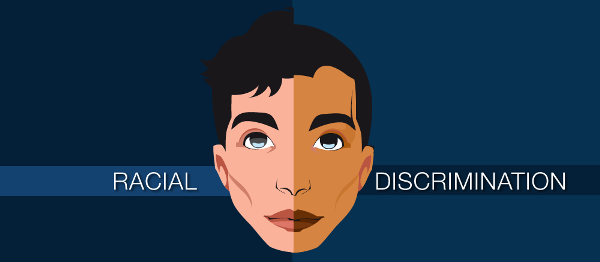
All you need to know about Racial Discrimination – Infographic

Racial discrimination is when a person of a particular race is treated less favourably than another person of a different race in a similar situation. This type of discrimination can be based on colour, descent, nationality, ethnic origin or immigrant status. Types of Racial Discrimination There are two types of racial discrimination: Direct discrimination This is referred to as a situation where one person is treated differently than the other …

Read more

Compensation Against Age Discrimination in United Kingdom

The Equality Act According to the Equality Act, any discrimination or unfair treatment on the basis of a personal characteristic, such as age, is against the law. The law is in place to protect from discrimination in almost all cases. The act is applied to discrimination on the following basis: Age Race Sex Gender Disability Belief or religion Sexual orientation Marital status Pregnancy or maternity How does the law protect …

Read more

Redundancy during Pregnancy and Statutory Maternity Pay

What is redundancy? Redundancy is basically a type of dismissal. To be made redundant, you have to be dismissed for one of the following reasons: The need for workers of a particular skill has reduced or ended in your employer’s organisation Your workplace has permanently or temporarily closed down. Your employer goes out of business Redundancy can be a fair reason for dismissal but it has been often used as …

Read more

What is an Occupational Scheme?

Irrespective of whether you are an employer or an employee, there are a plethora of benefits of an occupational scheme or an occupational pension scheme. An occupational pension scheme usually involves not just the employee but also the employer’s contribution. In this type of pension plan, the employer is committed to contribute to the pension of an employee within the DC (defined contribution) scheme. There is no doubt that occupational …

Read more

Make an Enquiry