Get a FREE Solicitor CallTake our 5-min assessment to book yours

Michael Fallon resigns but is not necessarily guilty of sexual harassment
Michael Fallon Resigns

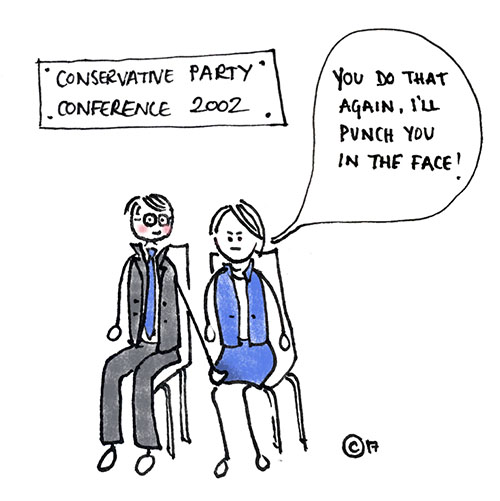
Michael Fallon resigns as Defence Secretary, following an allegation of sexual harassment, his resignation letter states that “in the past” his behaviour “had fallen below the high standards that we require of the Armed Forces”.  The Allegation Whilst there may be other allegations of harassment in the swirl of accusations, denials and apologies circling around Westminster as part of the list of 40 MPs including 15 Ministers who are deemed …

Read more

Case Study: Uplift of injury to feelings awards in discrimination cases

The Court of Appeal has recently provided clarification as to whether uplifts in damages should be applied to injury to feelings awards in Employment Tribunal discrimination cases. The personal injury case of Simmons vs Castle provides authority for an uplift to damages of 10% in certain types of personal injury claims. The increase in compensation in personal injury claims was ordered by the Court of Appeal to compensate claimants for …

Read more

Time off for religious observance

There is no legal right to time off for religious duties, prayer, worship and festivals.  That said, employees who have been refused time off for religious festivals have brought successful claims in employment tribunals for religious discrimination where there has not been a legitimate business reason behind the refusal.  Muslim employees in a Tesco store won a case for harassment when they claimed that the prayer room that they had …

Read more

Case Study: Older employee told “better suited to traditional agency”

The recently reported case of Gomes v Henworth Limited and another.  The Claimant had been employed since 2009 by an estate agent as an Administrative Assistant.  During a conversation about alleged shortcomings with her work (errors in a letter that was sent out).  The tribunal found that the second Respondent, Mr Graham Gold, had said that she would be “better suited to a traditional agency”.  That comment, along with suggestions …

Read more

Cohabitees and others not protected by marriage discrimination

Engagment

Originally conceived to prevent women from being dismissed upon marrying, marriage discrimination now prevents those who are married or civil partners from being subjected to any type of discrimination.  Section 8 of the Equality Act 2010 does not protect: single people; people who live together; the divorced or those whose civil partnerships have been dissolved; Engaged couples. Who is not protected? People who are not married or civil partners are …

Read more

Protected Characteristics: What are they?

Protected Characteristics

The Equality Act 2010 protects employees and job applicants from being subjected to discrimination (less favourable treatment).  It makes it unlawful to treat a person, or group of people, differently or subject them to harassment on the grounds of certain defined areas. 

Sexual Harassment in the Workplace

Sexual harassment is unwelcome sexual behaviour which either violates a person’s dignity or creates an intimidating, hostile, degrading, humiliating or offensive environment for them. Sexual harassment also describes situations in which people are treated less favourably because they either submit to or reject sexual conduct. Harassment may be verbal, non-verbal or physical  Verbal: Name calling with a sexual theme, comments about appearance and attractiveness, questions about sex life, comments and …

Read more

Harassment in the Workplace

Definition of harassment The Equality Act 2010 defines harassment at Section 26 as follows: A person (A) harasses another (B) if A engages in unwanted conduct related to a relevant protected characteristic which has the purpose or effect of either: Violating B’s dignity, or Creating an intimidating, hostile, degrading, humiliating or offensive environment for B. Please note that sexual harassment has a further definition relating to rejection or submission of …

Read more

Redundancy could be banned to new mothers

Redundancy could be banned for new mothers

A recent report by the Women and Equalities Committee, is calling for better protection from discrimination for new mothers. If new proposals go ahead, pregnant women and new mothers may be given better protection from redundancy at work. Following a report published by the Women and Equalities Committee, earlier this year, a redundancy ban for all pregnant women, new mothers and for up to 6 months after returning to work following …

Read more

Make an Enquiry